
Why Sleep Is the Most Important Part of Your Health


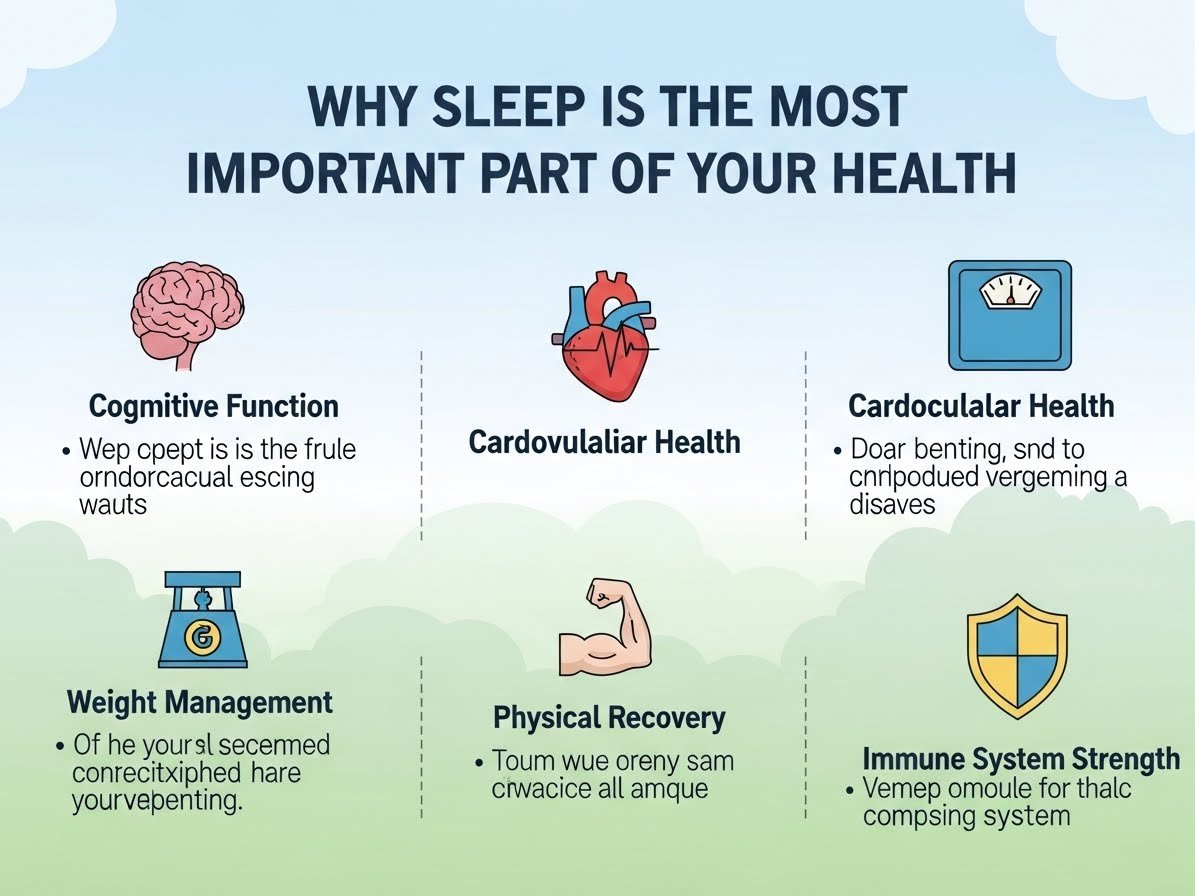
Sleep is more than just rest—it is the foundation of your physical, mental, and emotional well-being. While many people focus on diet, exercise, and supplements, they often overlook the most essential pillar of good health: quality sleep. Without proper sleep, your body and mind cannot function at their best, no matter how healthy your lifestyle is.
In this article, we explore why sleep is so important and how it affects every system in the body.
1. Sleep Is the Body’s Natural Repair System
Every night when you fall asleep, your body begins a deep repair process.
During sleep:
Damaged cells are restored
Muscles and tissues heal
Immune system strengthens
Hormones regulate and rebalance
Deep sleep is especially important because that’s when your body performs the most intensive repair work.
2. Sleep Protects Your Heart
A lack of sleep increases your risk of cardiovascular problems.
Poor sleep is linked to:
High blood pressure
Irregular heartbeat
Increased inflammation
Higher risk of heart attack and stroke
People who get 7–8 hours of quality sleep per night have healthier hearts and lower long-term disease risk.
3. Sleep Controls Your Weight and Metabolism
Did you know sleep can influence your appetite?
When you don’t sleep enough:
Your hunger hormone ghrelin increases
Your fullness hormone leptin decreases
You crave sugary, high-calorie foods
Your metabolism slows down
This combination makes weight gain much more likely, even if you eat the same amount of food as usual.
4. Sleep Supports Brain Function and Memory
Your brain depends on good sleep to stay sharp.
During sleep:
Memories are processed and stored
New skills are reinforced
Cognitive performance improves
Toxins (including Alzheimer’s-related proteins) are cleared
This is why poor sleep leads to brain fog, forgetfulness, and slower decision-making.
5. Sleep Strengthens the Immune System
If you seem to get sick often, lack of sleep might be the reason.
Sleep boosts your immune system by:
Increasing infection-fighting cells
Reducing inflammation
Improving immune response
Just one night of poor sleep can weaken your body’s ability to fight viruses or bacteria.
6. Sleep Improves Mood and Emotional Stability
Lack of sleep affects your emotions just as much as your body.
When you’re sleep-deprived:
Stress increases
Irritation and mood swings become more common
Anxiety and depression symptoms worsen
You have less patience and emotional control
Good sleep improves your emotional balance and helps you handle daily challenges more clearly.
7. Sleep Helps Maintain Hormonal Balance
Hormones that control hunger, stress, energy, and growth all depend on sleep.
Poor sleep disrupts:
Cortisol (stress hormone)
Insulin (blood sugar)
Growth hormone
Thyroid hormones
Long-term sleep deprivation can lead to hormone-related illnesses such as diabetes, weight gain, or chronic stress.
8. Sleep Boosts Productivity and Performance
With proper sleep, you are:
More focused
More creative
Better at problem-solving
Faster in reaction and decision-making
That’s why athletes, business leaders, and students prioritize getting enough sleep every night.
How Much Sleep Do You Really Need?
The average adult needs 7 to 9 hours of quality sleep per night. Teens need 8–10 hours, and children need even more.
But quality matters just as much as quantity.
Tips for Better Sleep
Stick to the same sleep schedule
Avoid screens for 1 hour before bed
Keep your bedroom cool and dark
Limit caffeine after noon
Avoid heavy meals late at night
Exercise regularly
Create a relaxing bedtime routine
Small habits can dramatically improve sleep quality.
