

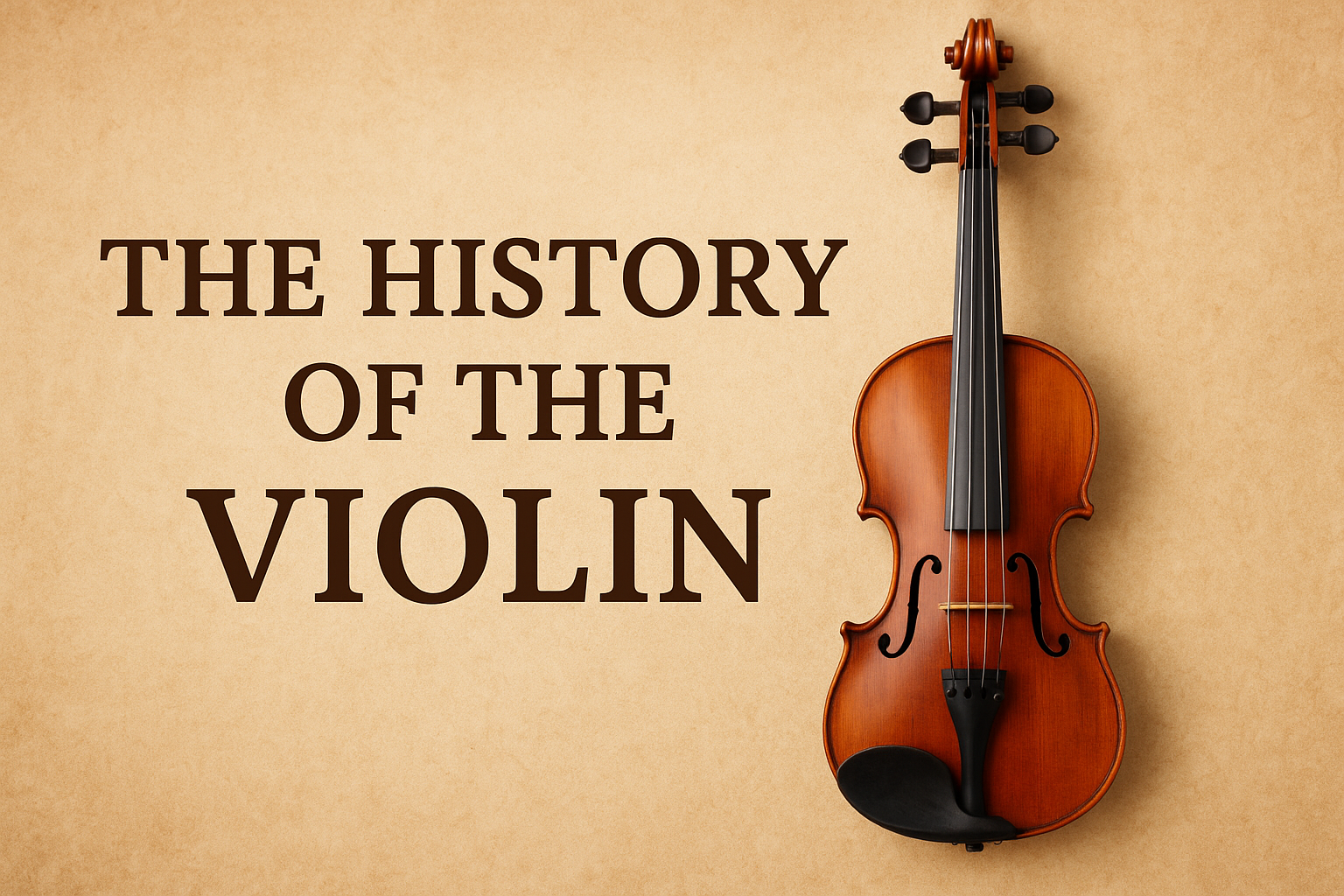
The violin is one of the most expressive and widely used musical instruments in the world. Its beautiful sound has been part of classical, folk, and modern music for centuries. But where does the violin come from? The story of the violin is a journey through history, culture, and craftsmanship.
Early Origins of Bowed Instruments
The violin did not appear suddenly in its modern form. Its roots can be traced back to early bowed instruments from the Middle East and Central Asia. Instruments such as the rebab, used around the 10th century, influenced the development of bowed string instruments in Europe.
As trade and cultural exchange expanded, these early instruments reached Europe, where musicians and instrument makers began refining their shape and sound.
Birth of the Violin in Italy
The modern violin emerged in Northern Italy during the early 16th century. Cities like Cremona, Brescia, and Venice became famous centers of violin making. Italian luthiers experimented with size, shape, and materials to create an instrument with a powerful and flexible sound.
One of the earliest known violin makers was Andrea Amati, who helped standardize the violin’s design. His work laid the foundation for future generations of master luthiers.
The Golden Age of Violin Making
The 17th and 18th centuries are known as the Golden Age of the violin. During this period, legendary makers such as Antonio Stradivari, Giuseppe Guarneri, and Nicolo Amati perfected violin craftsmanship. Their instruments are still considered the finest ever made and are worth millions of dollars today.
These violins are admired for their exceptional tone, balance, and projection.
Evolution and Global Spread
Over time, the violin spread across Europe and eventually around the world. It became a key instrument in classical orchestras, folk traditions, and later in jazz and modern music. While manufacturing techniques have evolved, the basic design of the violin has remained largely unchanged for over 400 years.
Conclusion
The violin comes from a rich history shaped by cultural exchange, skilled craftsmanship, and musical innovation. From early bowed instruments to the masterpieces of Italian luthiers, the violin continues to inspire musicians and audiences worldwide.
