

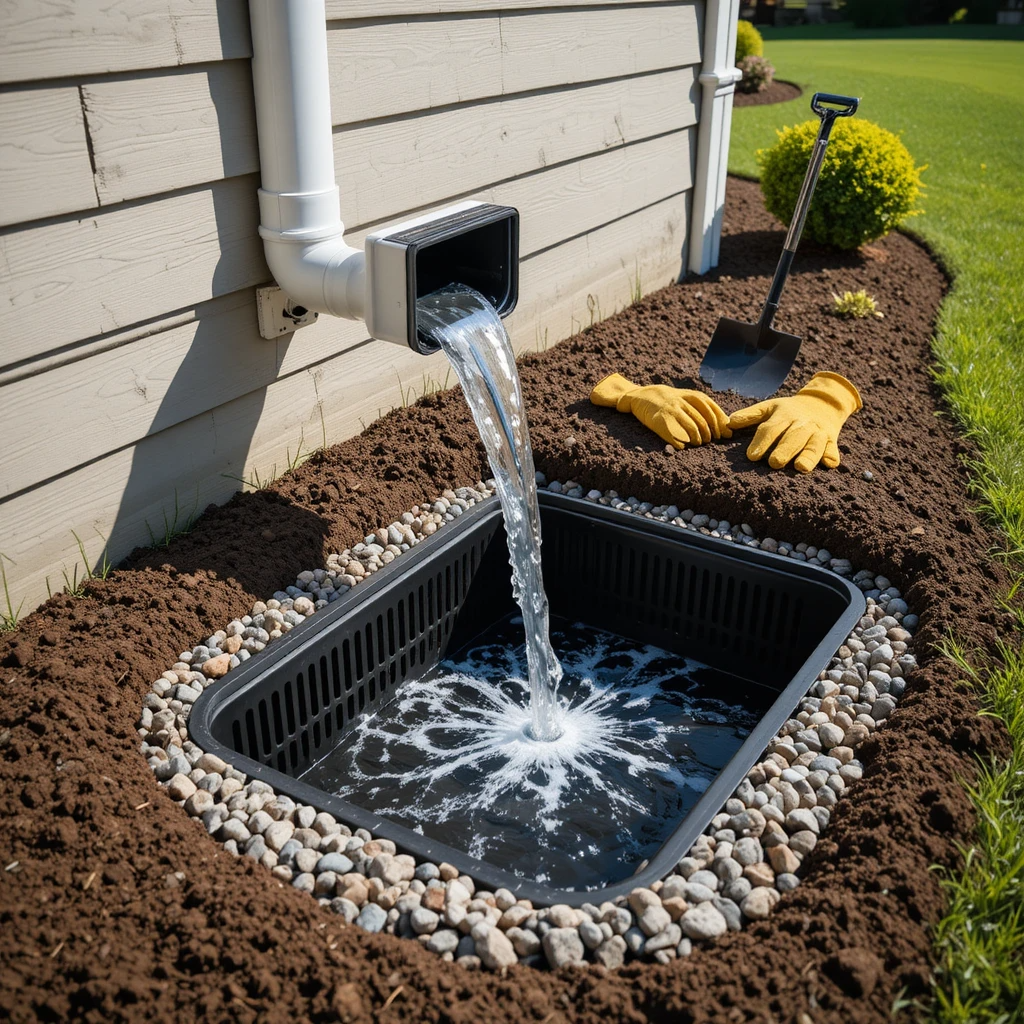
✅ 1. Downspout Extension (Easiest & Most Common Fix)
Summary:
A downspout extension directs rainwater farther away from the foundation, preventing soil saturation, basement leaks, and erosion.
How to do it:
Attach a flexible or rigid extension to your gutter downspout.
Extend it 6–10 feet from the house.
Ensure it slopes slightly downward.
Add a splash block or gravel pad at the end to break water flow.
Secure it so it doesn’t disconnect during heavy rain.
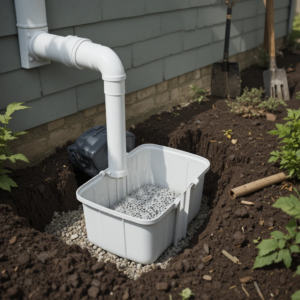
✅ 2. Underground Gutter Drain (Buried PVC or Corrugated Pipe)
Summary:
This system hides the drainage underground and channels water to a safe area—like a pop-up emitter, curb, swale, or dry well.
How to do it:
Dig a trench starting at the downspout.
Maintain a 1–2% slope for gravity flow.
Lay landscape fabric in the trench.
Install a solid PVC or corrugated drain pipe.
Connect pipe to the downspout outlet.
Bury pipe with soil and sod.
Install a pop-up emitter or alternative outlet.
✅ 3. Dry Creek Bed (Landscaping + Drainage Combo)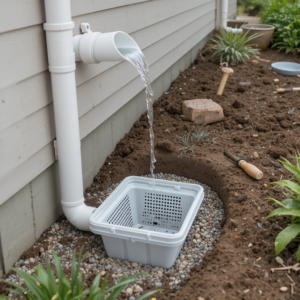
Summary:
A dry creek bed controls runoff by channeling rainwater through a stone-lined path that blends into your landscaping.
How to do it:
Mark a natural path for water to flow.
Dig a shallow, curved trench.
Line with landscape fabric.
Fill with small and medium river stones.
Add large rocks or plants along edges.
Direct your downspout extension into the creek bed.
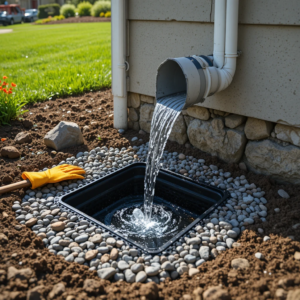
✅ 4. Rain Barrel Catchment System
Summary:
Rain barrels capture water from downspouts so it doesn’t flood the area around your home—and you get free water for plants.
How to do it:
Place a rain barrel beneath a downspout.
Install a diverter kit and connect it to the barrel.
Elevate the barrel on blocks for better pressure.
Add an overflow hose to redirect excess water.
Use the stored water as needed for gardening.
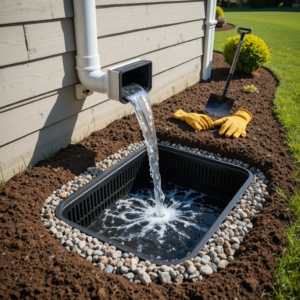
✅ 5. French Drain Connected to Downspout
Summary:
A French drain absorbs large amounts of water and prevents pooling or saturation around foundations—ideal for wet yards.
How to do it:
Dig a trench at least 12–18 inches deep.
Line it with landscape fabric.
Add a base layer of gravel.
Place a perforated pipe (holes down or sideways).
Connect the downspout to the pipe.
Add more gravel, wrap fabric over the top.
Cover with soil and reseed.
